
Spatial Computing: How AI and Smart Glasses Are Transforming Everyday Life
For decades, digital experiences have been confined to screens. Whether using smartphones, laptops, or tablets, people have interacted with information through flat displays. Today, a new technological shift is emerging—spatial computing.
Powered by advancements in artificial intelligence (AI), augmented reality (AR), and smart glasses, spatial computing is transforming how people interact with digital content in the physical world. Instead of looking at screens, users can access information, communicate, navigate, and work through immersive digital layers seamlessly integrated into their surroundings.
As major technology companies invest heavily in AI wearables and next-generation computing platforms, spatial computing is quickly becoming one of the most influential technology trends of 2026. But what exactly is spatial computing, and how is it changing everyday life?
What Is Spatial Computing?
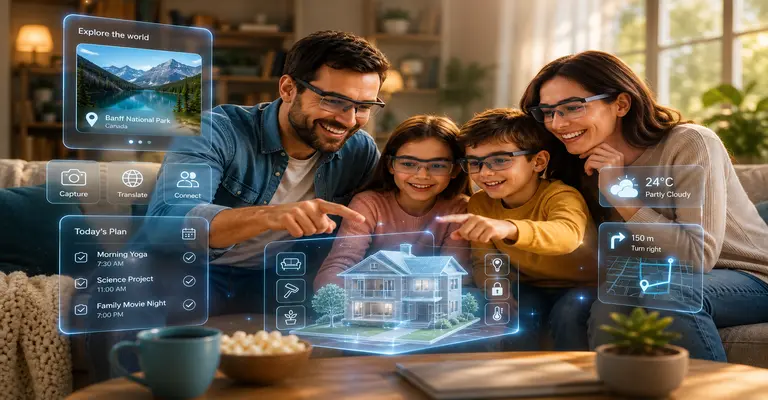
Spatial computing refers to technology that enables computers to understand and interact with the physical environment in three dimensions. By combining AI, sensors, cameras, AR, and advanced computing systems, digital content can be placed and manipulated within real-world spaces.
Unlike traditional computing, where users interact through screens and keyboards, spatial computing allows people to engage with digital information naturally using gestures, voice commands, eye tracking, and movement.
Imagine receiving navigation directions floating in front of you while walking, collaborating with virtual 3D models during a meeting, or instantly translating conversations through smart glasses. These are practical examples of spatial computing already becoming reality.
The Role of AI in Spatial Computing
Artificial intelligence serves as the foundation that makes spatial computing truly intelligent.
AI systems help devices understand environments, recognize objects, interpret user intent, and deliver contextual information in real time. Without AI, spatial computing would simply display information without understanding its surroundings.
Some key AI-powered capabilities include:
- Real-time object recognition
- Voice assistants with contextual awareness
- Language translation and transcription
- Personalized recommendations
- Gesture and eye-tracking interpretation
- Environmental mapping and navigation
As AI models become more advanced, spatial computing experiences will become increasingly personalized and intuitive.
Smart Glasses: The Gateway to Spatial Computing
One of the most exciting developments in spatial computing is the rise of AI-powered smart glasses.
Unlike earlier wearable devices that offered limited functionality, modern smart glasses integrate AI assistants, cameras, microphones, AR displays, and connectivity features into lightweight designs.
These devices can:
- Display directions directly in the user’s field of view
- Provide real-time language translation
- Deliver instant information about objects and locations
- Assist with hands-free communication
- Capture photos and videos
- Support workplace productivity and collaboration
As hardware becomes smaller and more powerful, smart glasses are expected to become a mainstream alternative to smartphones for many daily tasks.

How Spatial Computing Is Transforming Everyday Life
1. Smarter Navigation and Travel
Navigation is becoming more intuitive through spatial computing.
Instead of repeatedly checking a phone, users can receive AR directions overlaid onto streets, sidewalks, and landmarks. AI can also provide contextual information about nearby attractions, restaurants, transportation options, and points of interest.
This creates safer and more efficient travel experiences while reducing distractions.
2. Revolutionizing Shopping Experiences
Retailers are increasingly adopting spatial computing technologies to improve customer engagement.
Consumers can virtually try on clothing, eyewear, cosmetics, and accessories before purchasing. Furniture can be visualized inside homes using AR technology, helping shoppers make more informed buying decisions.
AI-driven recommendations further enhance the experience by suggesting products based on preferences and behavior.
3. Enhancing Workplace Productivity
Spatial computing is reshaping professional environments across industries.
Employees can interact with virtual screens, collaborate on 3D designs, conduct immersive meetings, and access information without physical monitors.
Industries benefiting from spatial computing include:
- Architecture
- Engineering
- Manufacturing
- Healthcare
- Education
- Remote collaboration
By reducing reliance on traditional workstations, spatial computing improves efficiency and flexibility.
4. Transforming Healthcare
Healthcare professionals are using spatial computing to improve patient outcomes and medical training.
Applications include:
- Surgical visualization
- Medical imaging
- Remote consultations
- Virtual patient simulations
- Rehabilitation programs
Doctors can access critical information while keeping their focus on patients, leading to better decision-making and enhanced care delivery.
5. Creating Immersive Learning Experiences
Education is becoming more interactive through spatial computing.
Students can explore historical landmarks, visualize scientific concepts, and engage with virtual environments that improve understanding and retention.
Rather than reading about complex topics, learners can experience them in three-dimensional space, making education more engaging and effective.
Challenges Facing Spatial Computing
Despite its potential, spatial computing faces several challenges.
Privacy Concerns
Devices equipped with cameras and sensors raise questions about data collection and user privacy. Strong security measures and transparent policies will be essential.
Hardware Limitations
Smart glasses and wearable devices still face challenges related to battery life, comfort, display quality, and affordability.
User Adoption
Many consumers remain unfamiliar with spatial computing technologies. Wider adoption will depend on user-friendly designs and clear everyday benefits.
Infrastructure Requirements
Advanced spatial computing experiences require reliable connectivity, cloud computing resources, and powerful AI systems.
The Future of Spatial Computing
Industry experts believe spatial computing could become the next major computing platform after smartphones.
Future developments may include:
- Lightweight AI-powered glasses replacing mobile devices
- Highly personalized digital assistants
- Advanced mixed reality workspaces
- Real-time multilingual communication
- Immersive social experiences
- Intelligent smart city integration
As AI continues to evolve, spatial computing will blur the boundaries between physical and digital environments, creating experiences that feel more natural and seamless than ever before.
Examples of Spatial Computing in Action
- Apple uses spatial interfaces that allow users to interact with apps in their physical surroundings.
- Google is advancing AI-powered wearable experiences with real-time assistance.
- Microsoft applies mixed reality solutions in healthcare, engineering, and industrial training.
- Automotive manufacturers are using spatial computing for navigation and heads-up displays.
- Retail brands are deploying virtual try-on technologies for customers.
Key Benefits
- Hands-free access to information
- More natural human-computer interaction
- Improved productivity and collaboration
- Better navigation and situational awareness
- Enhanced learning and training experiences
- Personalized AI assistance in real time
What Could Spatial Computing Look Like by 2030?
Predicting the future of technology is never easy, but the direction of spatial computing is becoming increasingly clear.
By 2030, we may no longer think of technology as something we carry in our pockets. Instead, digital experiences could exist naturally around us.
Imagine attending meetings through lifelike holographic workspaces, receiving contextual information exactly when you need it, or interacting with AI assistants that understand not only your voice but also your surroundings and intentions.
Smart glasses could eventually become as common as smartphones are today. Information may appear when needed and disappear when it is not, creating a more seamless relationship between humans and technology.
Perhaps the most exciting possibility is that technology becomes less visible. Rather than demanding our attention through screens and notifications, spatial computing could quietly support our goals, helping us navigate, learn, create, and communicate more effectively.
The transition will not happen overnight, and challenges around privacy, ethics, and accessibility will need careful consideration. Yet the trajectory is clear: computing is evolving beyond screens and moving into the spaces where we live, work, and connect.
That shift may ultimately prove to be as significant as the arrival of the smartphone itself.
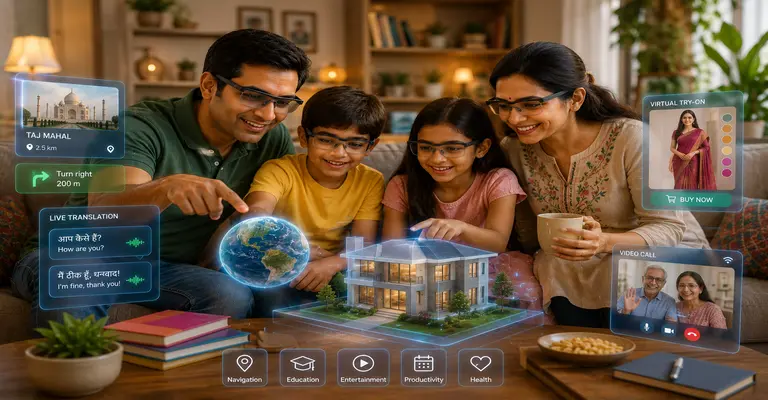
Spatial computing is more than the next step in technology—it represents a fundamental shift in how humans interact with the digital world. By bringing together artificial intelligence, augmented reality, advanced sensors, and smart glasses, it is creating a future where technology feels less like a tool and more like a natural extension of our everyday lives.
The true promise of spatial computing lies in its ability to make information more accessible, experiences more immersive, and human potential more powerful. From transforming healthcare and education to revolutionizing workplaces, transportation, and communication, this technology has the potential to solve real-world challenges while opening doors to opportunities we have only begun to imagine.
As innovation accelerates, the coming years will likely bring smarter devices, more intuitive digital assistants, and seamless interactions between the physical and virtual worlds. For individuals, businesses, and communities, embracing spatial computing means preparing for a future where creativity, productivity, and connectivity reach entirely new levels.
The blueprint for tomorrow is already taking shape today. Those who understand and adapt to this transformation will be better positioned to learn, innovate, and thrive in an increasingly digital society. Spatial computing is not just changing the way we use technology—it is redefining the way we experience the world, inspiring us to imagine bigger possibilities and build a smarter, more connected future for generations to come.
Frequently Asked Questions (FAQ) about Augmented Reality (AR)
What is Augmented Reality (AR)?
Augmented Reality is a technology that overlays digital content onto the real world, enhancing the user’s perception of their environment.
How is AR different from Virtual Reality (VR)?
AR (Augmented Reality) adds digital elements to the real world.
VR (Virtual Reality) replaces the real world with a fully virtual environment.
What is the future of AR technology?
The future of AR includes wearable AR glasses, smart city applications, immersive education, healthcare innovations, and AI-powered personalized experiences. Experts believe AR may one day replace smartphones as our main digital tool.
What are some popular AR apps?
IKEA Place – Place furniture virtually in your home.
Lenskart/Nykaa – Virtual try-on for glasses and makeup.
Google Lens – Identify objects, translate text, and search using your camera.
Snapchat & Instagram – Fun AR filters.
Where is AR used in everyday life?
AR is used in shopping (virtual try-ons), education (3D learning apps), healthcare (surgeries, training), navigation (Google Maps Live View), and social media filters (Snapchat, Instagram).
Want to continue learning?
Register and get practical tutorials, tips, and real-world projects.
Register