
Why Post-Quantum Security Matters for Modern Software Development
Technology is changing faster than ever, and one of the most exciting innovations is quantum computing. Experts believe quantum computers could solve complex problems much faster than traditional computers. While this advancement could transform industries such as healthcare, finance, and scientific research, it also creates new cybersecurity risks that software developers and businesses cannot ignore.
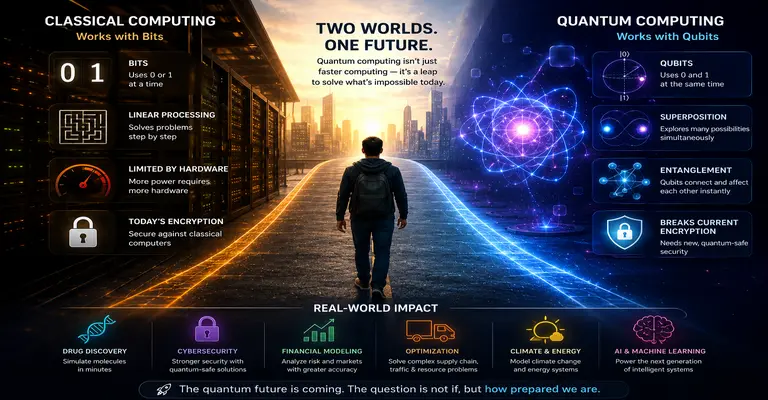
Today, most online security systems rely on encryption to protect sensitive information. From online banking and cloud storage to emails and mobile apps, encryption keeps data safe from hackers. However, powerful quantum computers may eventually be able to break some of the encryption methods we use today.
This growing concern has led to the rise of post-quantum security, a critical area of cybersecurity focused on protecting data from future quantum threats. As organizations continue to depend on digital systems, understanding and implementing post-quantum security is becoming increasingly important for modern software development.

Understanding Post-Quantum Security
Post-quantum security refers to security methods and cryptographic algorithms designed to remain safe even when powerful quantum computers become widely available.
Currently, many systems use encryption standards such as RSA and Elliptic Curve Cryptography (ECC). These technologies protect websites, applications, digital payments, and online communications. Their security depends on mathematical problems that are extremely difficult for traditional computers to solve.
Quantum computers, however, could solve some of these problems much faster. This means that data protected by current encryption methods may become vulnerable in the future.
To address this challenge, researchers are developing post-quantum cryptography, which focuses on creating quantum-resistant algorithms that can protect information against both traditional and quantum computer attacks.
Why Developers Should Pay Attention Now
Many people assume that quantum computing is still years away and does not require immediate attention. However, cybersecurity experts recommend preparing now because security transitions often take years to complete.
The “Harvest Now, Decrypt Later” Risk
One of the biggest concerns is known as “harvest now, decrypt later.”
In this scenario, cybercriminals collect encrypted data today and store it until quantum computers become powerful enough to decrypt it in the future.
This means sensitive information shared today could be exposed years later if organizations continue relying solely on traditional encryption methods.
Industries such as healthcare, banking, government, education, and legal services are especially vulnerable because they manage highly confidential information that must remain secure for long periods.
Long Software Lifecycles
Many software applications remain active for ten years or more. Systems being developed today may still be handling sensitive data when quantum computing becomes more advanced.
By adopting quantum-safe security practices now, developers can reduce future risks and avoid costly security upgrades later.
The Impact of Quantum Computing on Software Security
Quantum computing could affect several important areas of software security.
Encryption and Data Protection
Most modern applications rely on encryption to protect user data. If current encryption standards become vulnerable to quantum attacks, developers will need to adopt quantum-resistant encryption methods.
Digital Certificates and Authentication
Secure websites, APIs, and enterprise applications use digital certificates to verify identities and establish trust.
Many of these systems depend on cryptographic standards that may eventually require replacement with post-quantum alternatives.
Software Supply Chain Security
Modern software often depends on third-party libraries, cloud platforms, APIs, and external services.
If any component in the software supply chain lacks quantum-safe protection, it could create security vulnerabilities throughout the entire system.
Long-Term Data Storage
Organizations that store sensitive records must think about future security risks.
Customer information, financial records, intellectual property, and healthcare data may need protection for decades, making post-quantum cybersecurity a critical consideration.

Key Principles of Quantum-Resistant Software Development
Developers do not need advanced knowledge of quantum physics to prepare for the future. Instead, they should focus on practical security strategies that support flexibility and long-term protection.
1. Build Cryptographic Flexibility
Avoid hard-coding encryption algorithms directly into applications whenever possible.
Software should be designed so encryption methods can be updated or replaced without major changes to the system architecture.
This approach makes it easier to adopt new security standards as technology evolves.
2. Stay Updated on Cybersecurity Standards
The field of post-quantum cryptography is evolving rapidly.
Developers should follow updates from cybersecurity organizations, industry experts, and standards bodies to stay informed about the latest recommendations and best practices.
3. Conduct Regular Security Audits
Security audits help organizations identify weaknesses before they become serious problems.
Regular assessments can uncover:
- Outdated encryption methods
- Legacy security protocols
- Vulnerable third-party dependencies
- Weak authentication systems
Understanding where cryptography is used makes future upgrades much easier.
4. Strengthen Data Protection Strategies
Not all data requires the same level of protection.
Organizations should classify information based on sensitivity and determine which data needs long-term security.
Critical information should be prioritized when implementing post-quantum security measures.
5. Follow Secure Coding Practices
Secure coding remains one of the most effective ways to reduce cybersecurity risks.
Developers should focus on:
- Strong authentication
- Access control management
- Secure API development
- Vulnerability testing
- Regular software updates
These practices create a strong security foundation regardless of future technological changes.
Benefits of Early Adoption
Organizations that begin preparing for post-quantum security today can gain several important advantages.
Reduced Future Costs
Making gradual security improvements is usually more affordable than rushing to replace vulnerable systems after a major threat emerges.
Better Regulatory Compliance
Governments and regulatory agencies are placing greater emphasis on cybersecurity and data protection.
Organizations that prepare early may find it easier to meet future compliance requirements.
Increased Customer Trust
Customers expect businesses to protect their personal information.
Demonstrating a commitment to advanced cybersecurity measures can improve brand reputation and customer confidence.
Competitive Advantage
Companies that adopt emerging technologies often position themselves as industry leaders.
Investing in quantum-safe security can help organizations stand out in an increasingly competitive market.
Common Challenges in Post-Quantum Migration
Although the benefits are significant, transitioning to post-quantum security comes with challenges.
Organizations may face:
- Legacy systems that are difficult to upgrade
- Compatibility issues with existing infrastructure
- Performance concerns with new cryptographic algorithms
- Limited cybersecurity expertise
- Complex software environments
Successfully overcoming these challenges requires planning, collaboration, and long-term investment.
How Organizations Can Start Preparing for Post-Quantum Security Today
Even though large-scale quantum attacks are not yet common, organizations can take practical steps now to improve their readiness.
Create a Cryptographic Inventory
The first step is identifying where cryptography is used throughout the organization.
This includes:
- Databases
- APIs
- Authentication systems
- Digital certificates
- Cloud services
- Communication platforms
A complete inventory helps organizations understand which systems may require future upgrades.
Assess Long-Term Data Risks
Businesses should identify data that must remain confidential for many years.
Examples include:
- Customer records
- Financial information
- Intellectual property
- Healthcare data
- Business contracts
Protecting this information should be a top priority.
Adopt Cryptographic Agility
Cryptographic agility means designing systems so encryption methods can be updated easily.
Organizations that build flexibility into their software today will find it much easier to adopt future quantum-resistant algorithms.
Evaluate Third-Party Vendors
Cybersecurity depends on the entire technology ecosystem.
Organizations should ask vendors, cloud providers, and software partners about their plans for supporting post-quantum cryptography.
Invest in Training and Awareness
Developers, IT teams, and security professionals should stay informed about quantum computing trends and cybersecurity developments.
Training programs can help teams understand emerging risks and prepare for future changes.
Develop a Long-Term Migration Plan
Moving to quantum-resistant security will take time.
Organizations should create a roadmap that includes:
- Security priorities
- Budget planning
- Implementation timelines
- Technology upgrades
- Risk assessments
A structured approach reduces disruption and improves long-term security.
Preparing Today for Tomorrow’s Threats
Post-quantum security is not just about future-proofing technology. It is about developing a proactive cybersecurity strategy that protects sensitive information and builds customer trust.
Organizations that start preparing today will be better equipped to handle tomorrow’s security challenges.
How Organizations Can Start Preparing for Post-Quantum Security Today
While large-scale quantum attacks may still be years away, organizations can take meaningful steps today to strengthen their security posture and reduce future migration challenges. Early preparation not only minimizes risk but also ensures a smoother transition as quantum-resistant technologies become industry standards.
Create a Cryptographic Inventory
The first step toward post-quantum readiness is understanding where cryptography is used across the organization. This includes encryption algorithms, digital certificates, authentication systems, databases, APIs, cloud services, and communication channels.
By creating a comprehensive inventory, organizations can identify which systems may be vulnerable to future quantum threats and prioritize upgrades accordingly.
Assess Long-Term Data Risks
Not all data has the same lifespan or sensitivity. Organizations should evaluate which information must remain secure for many years, such as customer records, financial data, intellectual property, healthcare information, or confidential business communications.
Data with long-term value is particularly vulnerable to “harvest now, decrypt later” attacks, making it a priority for enhanced protection strategies.
Adopt Cryptographic Agility
One of the most effective ways to prepare for future security changes is to build applications with cryptographic agility. This means designing systems so encryption algorithms can be updated or replaced without requiring extensive redevelopment.
Organizations that embrace cryptographic agility today will find it easier to transition to quantum-resistant algorithms as standards continue to evolve.
Evaluate Third-Party Vendors and Partners
Modern software ecosystems rely heavily on external vendors, cloud providers, and third-party services. Even if an organization’s internal systems are secure, vulnerabilities within external dependencies can introduce significant risks.
Businesses should engage with vendors to understand their post-quantum security plans and ensure they are preparing for future cryptographic transitions.
Invest in Training and Awareness
Quantum computing and post-quantum cryptography are rapidly evolving fields. Developers, security teams, and IT leaders should stay informed about emerging standards, best practices, and implementation strategies.
Regular training and knowledge-sharing initiatives can help organizations make informed decisions and avoid costly security gaps in the future.
Develop a Long-Term Migration Strategy
Transitioning to quantum-resistant security will not happen overnight. Organizations should establish a phased roadmap that outlines priorities, timelines, budget considerations, and implementation milestones.
A well-defined migration strategy enables businesses to adapt gradually, reducing operational disruptions while strengthening long-term resilience.
Preparing Today for Tomorrow’s Threats
Post-quantum security is not solely about responding to a future technological breakthrough—it is about building a proactive security culture. Organizations that begin planning today will be better positioned to protect sensitive information, maintain regulatory compliance, and preserve customer trust in the years ahead.
Looking Ahead
Quantum computing has the potential to revolutionize technology, scientific research, artificial intelligence, and data analysis. However, it also introduces new cybersecurity challenges that businesses and developers must address.
Although the exact timeline for widespread quantum adoption remains uncertain, experts agree that preparation should begin now. Organizations that invest in post-quantum security, quantum-safe encryption, and secure software development will be better positioned to protect their systems and data in the future.
The goal is not simply to defend against future threats but to build software that remains secure, adaptable, and reliable in a rapidly evolving digital world.
Building a Secure Future with Post-Quantum Security
Post-quantum security is becoming one of the most important topics in modern cybersecurity and software development. As quantum computing continues to advance, traditional encryption methods may eventually become vulnerable, creating new risks for businesses and users alike.
By adopting post-quantum cryptography, improving cybersecurity practices, conducting regular security audits, and building flexible software systems, organizations can prepare for the next generation of digital security challenges.
The quantum era may still be developing, but the best time to start preparing for quantum-safe security is now.
Join the Quantum Community: Challenges, Courses, and Open Source.
Competitions: IBM Quantum Challenge
Courses: Qiskit Textbook, Microsoft Learn Quantum
Communities: Quantum Open Source Foundation, Quantum Hackathons
 Online Courses to Kickstart Your Quantum Journey.
 Online Courses to Kickstart Your Quantum Journey.
🎓 MIT xPRO: Quantum Computing Fundamentals – Professional certificate with hands-on labs and simulations.
🎓 Coursera – Quantum Computing Courses – Beginner to advanced courses, including Qiskit-based projects.
🎓 edX – Learn Quantum Computing – University-backed quantum computing courses and certificates.
🎓 IBM Quantum Learning Platform – Free access to tutorials, Jupyter notebooks, and IBM’s real quantum processors.
🎓 Udemy – Quantum Computing Courses – Affordable self-paced video courses on quantum algorithms and quantum ML.
Top-Rated Quantum Computing Videos.
 Top-Rated Quantum Computing Videos.
▶️ Quantum Computers, Explained With Quantum Physics – Beginner-friendly explanation with great visuals.
▶️ Meet Willow: Google’s Quantum Chip – A deep dive into Google’s latest hardware milestone.
▶️ Top 15 Quantum Computing Breakthroughs (So Far) – A roundup of innovations shaping 2025.
▶️ Quantum Computers, Explained With MKBHD (Bloomberg Originals) – High-level overview, very engaging and accessible.
FAQ: Quantum Computing Trends, PQC, and Secure Coding
What are the top quantum computing trends in 2026?
Breakthroughs in error mitigation, NIST PQC standards, and progress in quantum programming languages and hardware.
Why is PQC important now?
Traditional encryption (RSA, ECC) is vulnerable to quantum attacks. Post-quantum cryptography ensures long-term security.
How can students start learning quantum programming?
Use free resources like the Qiskit Textbook, follow a structured 6-week plan, and join community challenges.
What industries use quantum today?
Pharma, logistics, and finance are leading adoption with real-world pilots.
Where can I find open-source quantum projects?
Check Qiskit Advocates, Unitary Fund, and QOSF for opportunities to contribute.
Want to continue learning?
Register and get practical tutorials, tips, and real-world projects.
Register