
Google Algorithm Made Simple: A Step-by-Step Guide for Students.
If you’ve ever wondered what the Google Algorithm is and how it works, you’re not alone—and honestly, this is something every student stepping into the digital world should understand early. Google uses a powerful system to decide which websites appear when you search for anything online, and knowing how this works can give you a serious advantage—whether you want to start blogging, learn digital marketing, or understand how the internet really functions. In this beginner-friendly guide, we break down the Google Algorithm in simple terms, so students after 12th can move from confusion to clarity and start building smarter in the online world.
Take a step ahead and dive deeper into understanding the Google Algorithm—because once you truly get how it works, you stop guessing and start growing smarter in the digital world.
What is an Algorithm?
An algorithm is simply a step-by-step process to solve a problem or complete a task.
Think about your daily life. Whenever you do something in steps—like making tea, solving a math problem, or even getting ready for school—you’re actually following an algorithm.
🍎 Simple Example:
Making tea:
- Boil water
- Add tea leaves
- Add milk and sugar
- Stir and serve
👉 These steps, in order, form an algorithm.
💡 In very simple words:
An algorithm = A clear set of instructions that helps you get a result.
🚀 Real talk
If you understand algorithms early, you’ll find tech, coding, and even everyday decision-making much easier. It’s not a “big scary concept”—it’s just organized thinking.
Think of an algorithm like a fruit — simple on the outside, but purposeful in how it’s grown, structured, and used.
An algorithm is a step-by-step process to solve a problem or complete a task. Now imagine a fruit, say a mango. You don’t just randomly get a mango — there’s a clear process behind it: planting the seed, watering the tree, letting it grow, and finally harvesting the fruit. Each step happens in a specific order to achieve the final result — the mango you eat.
In the same way, an algorithm follows a defined sequence of steps to reach an outcome. Just like skipping watering would ruin the fruit, missing or changing steps in an algorithm can lead to wrong results.
So, if a fruit is the result, the algorithm is the exact recipe or process that makes sure you get that fruit successfully every time.
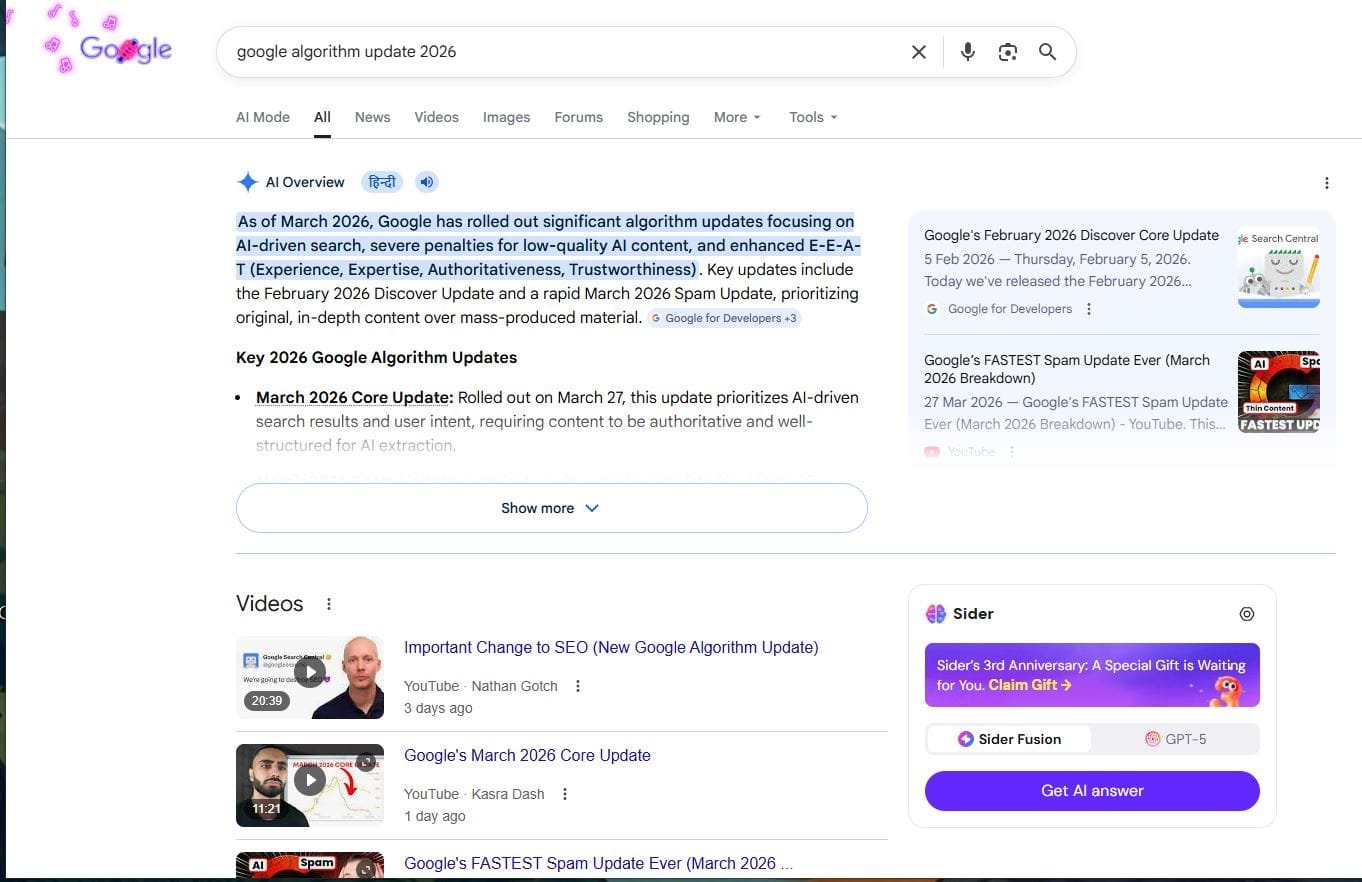
Let’s cut through the noise—Google’s algorithm isn’t one single formula anymore. It’s a constantly evolving system designed to understand intent and reward genuinely helpful content, not tricks.
What Google Algorithm actually does today
At its core, it works like a smart decision-maker:
- Input: What someone searches (your query)
- Process: Analyze billions of pages using multiple systems
- Output: The most relevant, useful, and trustworthy results
But here’s where the latest updates change the game 👇
Latest Google Algorithm Focus (2024–2026 trend)
1. Helpful Content System (Still Dominating)
Google heavily prioritizes content that is:
- Written for humans (not just SEO)
- Actually useful and experience-based
- Clear, practical, and trustworthy
If your blog feels generic or AI-spammy, it gets buried.
2. EEAT (Experience matters more now)
EEAT = Experience, Expertise, Authoritativeness, Trust
Now “Experience” is key:
- Have you actually done what you’re talking about?
- Are you sharing real insights or just rewriting others?
Example: A student guide written by someone who has been through it ranks better.
3. AI + Search (Search Generative Experience)
Google is integrating AI summaries into search.
- Users often get answers without clicking websites
- Only high-quality, clear content gets featured
Meaning: average blogs lose traffic, strong ones win big.
4. Spam & Low-Quality Crackdown
Google is aggressively removing:
- Keyword stuffing
- Fake backlinks
- Mass-produced low-value content
Shortcuts don’t work anymore.
5. User Experience Signals
Google tracks how people interact:
- Do they stay on your page?
- Do they leave quickly?
- Is your site fast and mobile-friendly?
If users don’t like your site, rankings drop.

What is the Google Algorithm?
Google’s algorithm is a set of rules and systems that decide:
Which websites should appear when someone searches for something?
Simple:
- You search for something
- Google scans billions of pages
- It shows the best ones
Step 2: Think of it like an examiner
Imagine:
- Thousands of students give an exam
- Only top answers get full marks
Google does the same:
- Websites = students
- Content = answers
- Rankings = marks
Step 3: Input (What starts everything)
Everything begins when a user types something like:
- “Best career after 12th.”
- “How to learn Figma.”
This is called a search query
Step 4: Processing (What Google checks)
Now Google doesn’t randomly pick sites. It checks:
1. Relevance
Does your content match the query?
2. Quality
Is it useful or just copied/fluffy?
3. Trust
Is your site reliable?
4. Experience
Does it feel like a real human wrote it?
Step 5: Ranking
After checking everything, Google ranks pages:
- Rank 1 = Best answer
- Rank 2 = Next best
- And so on
Most people only click the top 3 results.
Step 6: Output
Finally:
You see search results on your screen
That’s the final output of the algorithm.
We’re living in a time where technology is not just growing—it’s evolving every single day. From smart search systems like the Google Algorithm to AI tools and digital platforms, everything around you is powered by simple concepts like algorithms. The difference is, some people just use technology… while others understand it and grow with it.
If you want to grow online, this is your moment to step ahead. Don’t just scroll the internet—learn how it works. Don’t just consume content—start creating it. Because the future belongs to those who understand systems, not just users of them.
Start small, stay consistent, and keep learning. Today it’s “What is an Algorithm?”, tomorrow it could be building your own website, your own brand, or even your own digital career.
This is exactly what platforms like Life in Pixels Hub are here for—to turn confusion into clarity and help you move forward with confidence in this fast-changing digital world.
Latest Update: https://developers.google.com/search/docs/appearance/core-updates
Want to continue learning?
Register and get practical tutorials, tips, and real-world projects.
Register