
How Startups Decide Between Edge and Cloud Computing in 2026
Technology decisions can make or break a startup. A few years ago, cloud computing was the obvious choice for almost every new company. Today, however, the rise of AI, IoT devices, autonomous systems, and privacy concerns has made the decision much more nuanced.
The real question in 2026 is not Edge vs. Cloud.
It’s:
Which workloads should run in the cloud, and which should run at the edge?
Let’s explore how modern startups make this decision.
Every startup begins with a story — a dream fueled by innovation and the desire to solve a problem. But behind every big idea lies one crucial question: where should your data live?
In today’s tech landscape, two powerful paradigms dominate the discussion — edge computing and cloud computing. For startups trying to balance speed, scalability, and cost, understanding the difference between the two can shape the very foundation of your business.
Think of cloud computing as a vast digital warehouse — everything stored safely off-site, accessible anytime, anywhere. Now imagine edge computing as a nimble, street-smart partner — bringing computation closer to where data is generated, minimising delays and improving real-time decisions.
But which is better for startups? The answer isn’t one-size-fits-all. It depends on your business model, customer needs, and long-term growth strategy. In this guide, we’ll explore the meaning of cloud computing, the benefits of edge computing vs cloud computing for startup businesses, and the key factors that help you decide which approach fits your journey.

Understanding Cloud Computing
Cloud computing means storing and processing data in centralized data centers operated by providers like Amazon Web Services (AWS), Google Cloud, and Microsoft Azure.
Instead of buying expensive servers, startups rent computing resources and pay only for what they use.
Why startups love the cloud
- Low upfront investment
- Easy scalability
- Faster product launches
- Access to AI and analytics services
- Global availability
Cloud computing continues to dominate startup infrastructure because it enables rapid experimentation and growth. The global cloud market is expected to exceed $1 trillion as businesses continue investing heavily in AI-driven cloud services.
Understanding Edge Computing
Edge computing processes data closer to where it is generated—on devices, local servers, or nearby data centers.
Instead of sending every piece of information to a distant cloud server, some processing happens locally.
Examples:
- Smart cameras
- Industrial IoT sensors
- Autonomous vehicles
- Healthcare monitoring devices
- Retail checkout systems
The edge computing market is growing rapidly due to increasing demand for low-latency processing and real-time decision-making.
Why Edge Computing Is Exploding in 2026
Three major trends are accelerating edge adoption:
1. AI Inference at the Edge
Training large AI models still happens in massive cloud data centers.
Running those models (called AI inference) is increasingly moving closer to users and devices. Industry analysts expect inference workloads to account for the majority of AI computing in 2026.
Examples:
- AI-powered security cameras
- Smart factories
- Voice assistants
- Healthcare wearables
- Retail analytics systems
2. Lower Latency Requirements
Some applications simply cannot tolerate delays.
Imagine:
- Self-driving vehicles
- Manufacturing robots
- Augmented reality apps
- Real-time fraud detection
Sending data to a distant cloud server and waiting for a response can introduce unacceptable delays.
Edge computing solves this by processing data nearby.
3. Privacy and Data Sovereignty
New regulations and growing customer concerns are forcing businesses to rethink how they handle data.
Many startups now prefer processing sensitive information locally because:
- Less data leaves the device
- Better compliance
- Improved security
- Reduced exposure to breaches
Security and data sovereignty have become major drivers of edge adoption.
When Startups Should Choose Cloud Computing
Cloud computing remains the better option when:
 You are building an MVP.
Your traffic is unpredictable.
You need to scale quickly.
Your application doesn’t require real-time responses.
You want access to managed AI and analytics services.
Great examples
- SaaS platforms
- E-commerce stores
- Content websites
- CRMs
- Marketing platforms
- Collaboration tools
When Startups Should Choose Edge Computing
Edge computing makes sense when your application needs:
Ultra-low latency
Offline functionality
Real-time processing
Privacy-sensitive workloads
Reduced bandwidth costs
Great examples
- IoT products
- Smart cities
- Industrial automation
- Healthcare devices
- Autonomous systems
- Video analytics platforms
Benefits of Edge Computing vs Cloud Computing for Startups.
| Key Factor | Edge Computing | Cloud Computing | Best for Startups |
|---|---|---|---|
| Data Processing | Processes data locally on devices or nearby servers, minimizing reliance on centralized data centers. | Handles data through centralized cloud servers; efficient for batch processing and global workloads. | Ideal for startups developing IoT or AI-driven devices needing instant data processing at the edge. |
| Latency | Ultra-low latency; crucial for real-time analytics, AR/VR, and autonomous technologies. | Moderate latency; depends on internet connectivity and data center distance. | Choose edge if milliseconds matter (e.g., real-time apps). Choose cloud for non-critical latency workloads. |
| Scalability | Regionally scalable using distributed nodes; may require additional infrastructure investment. | Highly scalable globally with elastic virtual resources; perfect for rapid growth and demand spikes. | Startups aiming for quick user growth or SaaS delivery benefit most from cloud scalability. |
| Cost Structure | Lower bandwidth costs but higher setup expenses for edge hardware and network nodes. | Pay-as-you-go pricing lowers initial investment; however, long-term usage fees can grow. | Startups with limited budgets often start in the cloud; edge fits better when data costs rise. |
| Security & Privacy | Data processed locally offers improved privacy and reduced exposure to external attacks. | Cloud providers offer advanced security layers but data exposure risks exist during transmission. | Startups handling sensitive user data (e.g., healthtech, fintech) benefit from hybrid edge-cloud security. |
| Use Cases | IoT systems, robotics, autonomous vehicles, AR/VR, healthcare, and manufacturing analytics. | Web apps, SaaS, collaboration tools, big data analytics, and enterprise resource systems. | Edge for real-time and device-heavy startups; Cloud for digital platforms and SaaS providers. |
| Performance | Higher real-time performance and reduced lag due to proximity of computation. | Performance depends on network stability and cloud resource allocation. | Edge computing boosts user experience for latency-sensitive apps; cloud suits scale-focused startups. |
| Maintenance | Requires ongoing management of distributed edge nodes. | Managed by cloud vendors; minimal infrastructure management by startups. | Early-stage startups prefer cloud to minimize maintenance overhead. |
| Overall Startup Fit | Suited for hardware-oriented, IoT, or AI-driven startups needing fast decision cycles. | Best for digital-first, SaaS, or platform-based startups focused on scalability and cost-efficiency. | Hybrid models combining both can deliver the best of speed, scalability, and cost optimization. |
Cloud Computing vs On-Premise
Before cloud computing became mainstream, most businesses relied on on-premise infrastructure — physical servers and software hosted locally.
Let’s compare cloud computing vs on premise to see why most startups now prefer the cloud:
| Key Factor | Cloud Computing | On-Premise | Best Use Case for Startups |
|---|---|---|---|
| Infrastructure Ownership | Managed by third-party providers; startups access via the internet without owning physical hardware. | Infrastructure is owned and maintained on-site by the startup’s IT team. | Cloud suits startups that want to avoid heavy upfront hardware investments. |
| Cost Structure | Low entry cost with pay-as-you-go pricing; predictable monthly billing. | High upfront capital cost but lower long-term expenses after setup. | Cloud is ideal for lean startups with limited budgets; on-premise fits funded startups with IT resources. |
| Scalability | Instantly scalable — add or reduce computing power on demand. | Scaling requires new physical servers and installation time. | Startups anticipating fast growth or seasonal demand should opt for cloud scalability. |
| Maintenance | Vendor handles updates, patches, and uptime management. | Requires internal IT team for regular maintenance and troubleshooting. | Cloud is better for small teams without dedicated IT staff. |
| Accessibility | Accessible globally from any device with internet access. | Restricted to local network; remote access setup needed. | Cloud enables distributed or remote-first startup teams. |
| Security & Compliance | Top providers offer strong encryption, compliance, and monitoring tools. | Full control over data security, but all responsibility lies internally. | Cloud fits most startups; hybrid or on-premise better for regulated sectors like fintech or healthcare. |
| Performance | Dynamic performance scaling; affected by internet latency. | Stable local performance; limited by in-house hardware capacity. | Cloud works best for global apps; on-premise suits startups handling high-speed local operations. |
| Disaster Recovery | Automatic backups and multi-region redundancy built-in. | Manual backups required; slower recovery after system failure. | Cloud offers startups a safer, low-cost disaster recovery solution. |
| Implementation Speed | Quick deployment — ready within hours or days. | Longer setup time due to hardware procurement and configuration. | Cloud helps startups go to market faster with minimal setup effort. |
| Ideal Startup Fit | Startups focused on digital products, SaaS, or remote operations. | Startups with strict data control or custom infrastructure needs. | Most early-stage startups start in the cloud and move hybrid later as they grow. |
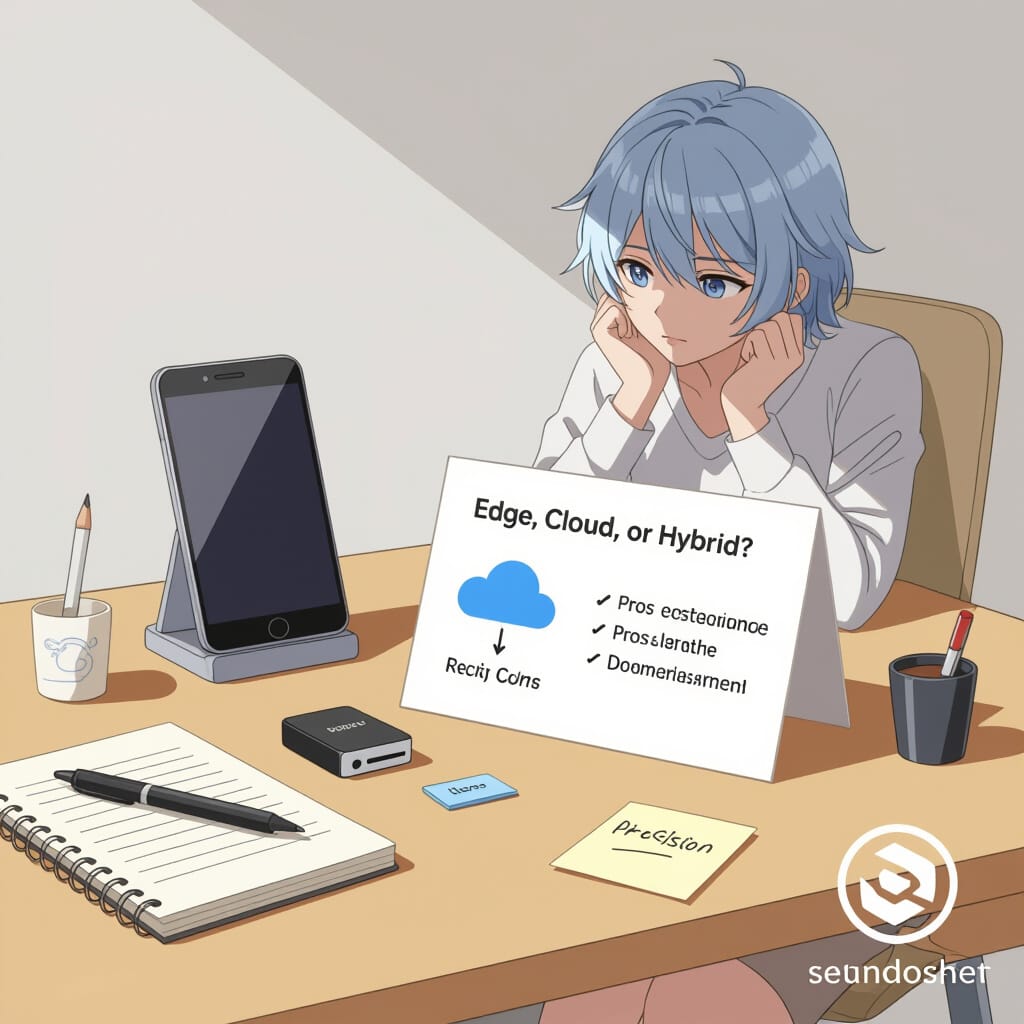
Edge/Cloud Computing Applications & Services
Startups are experimenting with both edge and cloud computing applications in exciting ways:
IoT Startups: Edge computing enables local device intelligence while cloud computing handles large-scale data analytics.
Health Tech: Edge devices process patient data in real time, while cloud platforms store and analyze historical health trends.
E-Commerce: Cloud computing supports dynamic websites, AI-based recommendations, and secure payment systems.
Gaming & AR/VR: Edge computing reduces lag for immersive experiences; cloud services provide multiplayer scalability.
AI Startups: Edge AI chips process real-time decisions locally, while the cloud trains and updates models at scale.
By combining cloud computing services and edge computing, startups can create resilient, high-performance ecosystems tailored to their unique needs.
Key Factors for Startups to Decide
Choosing between edge and cloud computing isn’t just a technical decision — it’s a strategic one. Here are the key factors every startup should consider:
Type of Data: If your startup generates high-volume, time-sensitive data (e.g., IoT, robotics), edge computing may be better.
Budget: Cloud computing minimises upfront costs, making it perfect for early-stage startups.
Scalability Needs: If rapid scaling is essential, cloud platforms offer unmatched flexibility.
Latency Sensitivity: Applications requiring instant processing benefit more from edge solutions.
Security Compliance: Evaluate where sensitive data is stored — local (edge) or remote (cloud).
Long-Term Vision: Many startups find success using a hybrid approach — edge for real-time processing and cloud for analytics and backups.
Top Courses and Resources to Learn Edge vs Cloud Computing for Startups
| Resource | Type | Short Description | Link |
|---|---|---|---|
| Cloud Computing (Coursera) | Course | Course collection & specializations covering cloud fundamentals, IaaS/PaaS/SaaS and major providers. | Open on Coursera |
| Introduction to Cloud Computing (Coursera) | Course | Intro course on cloud characteristics, models, and provider offerings — good starting point for startups. | Open course |
| Cloud Computing (edX) | Learning Hub | edX collection: cloud fundamentals, provider-specific training, and certificate options (audit available). | Explore on edX |
| AWS Training & Certification | Official | Free & paid AWS courses, labs, and startup credits — practical for building cloud infrastructure on AWS. | AWS Training |
| Intel® Edge AI for IoT Developers (Udacity) | Nanodegree / Article | Edge AI focused program and related resources for deploying models at the edge (ideal for IoT startups). | Read / Enroll |
| Edge Computing: Master the Next Frontier (Udemy) | Course | Practical course covering edge concepts, architectures, and real-world use cases for engineers and product teams. | View on Udemy |
| IEEE — Introduction to Edge Computing (Program) | Professional | A multi-course professional program for engineers and teams exploring edge deployment, security and design. | IEEE Program |
| Cloud Computing Full Course 2025 (YouTube) | Video | Long-format tutorial covering cloud fundamentals and how to become a cloud engineer (free, beginner-friendly). | Watch video |
| Edge vs Cloud Computing — Comparison (YouTube) | Video | Short explainer video comparing edge and cloud benefits and trade-offs — great for quick team briefings. | Watch video |
| Cloud Computing Playlist — Simplilearn (YouTube) | Playlist | Curated beginner-friendly playlist with short tutorials and concept videos (fast way to onboard non-technical founders). | Open playlist |
Technology evolves fast, and so should startups. Edge computing brings power to the edge — faster decisions, local control, and lower latency. Cloud computing delivers flexibility, scalability, and global reach.
The real question isn’t edge vs cloud, but rather how to balance them. Many successful startups adopt a hybrid strategy, blending the agility of edge computing with the vast resources of cloud computing services.
As your startup grows, understanding what is cloud computing, its applications, and the benefits of edge computing vs cloud computing for startup business will help you make smarter decisions — building an infrastructure that scales effortlessly while keeping innovation at the heart of your mission.
So, whether your story unfolds in the cloud or at the edge — make it one that moves fast, learns faster, and scales fearlessly.
Want to continue learning?
Register and get practical tutorials, tips, and real-world projects.
Register