
Autonomous AI & AI Agents: A Beginner-Friendly Guide
Artificial Intelligence is evolving faster than ever, and one of the most exciting developments today is Autonomous AI & AI Agents. Unlike traditional AI systems that simply respond to commands, autonomous systems can set goals, make decisions, take actions, and learn from results with minimal human supervision.
In simple terms, Autonomous AI & AI Agents are intelligent systems designed to think, plan, and execute tasks independently. From automating business workflows to powering advanced robotics, these systems are reshaping the future of technology in 2026 and beyond.
If you’re a student trying to understand what this technology really means, how it works, and why it matters, this guide will break it down in a clear and beginner-friendly way.
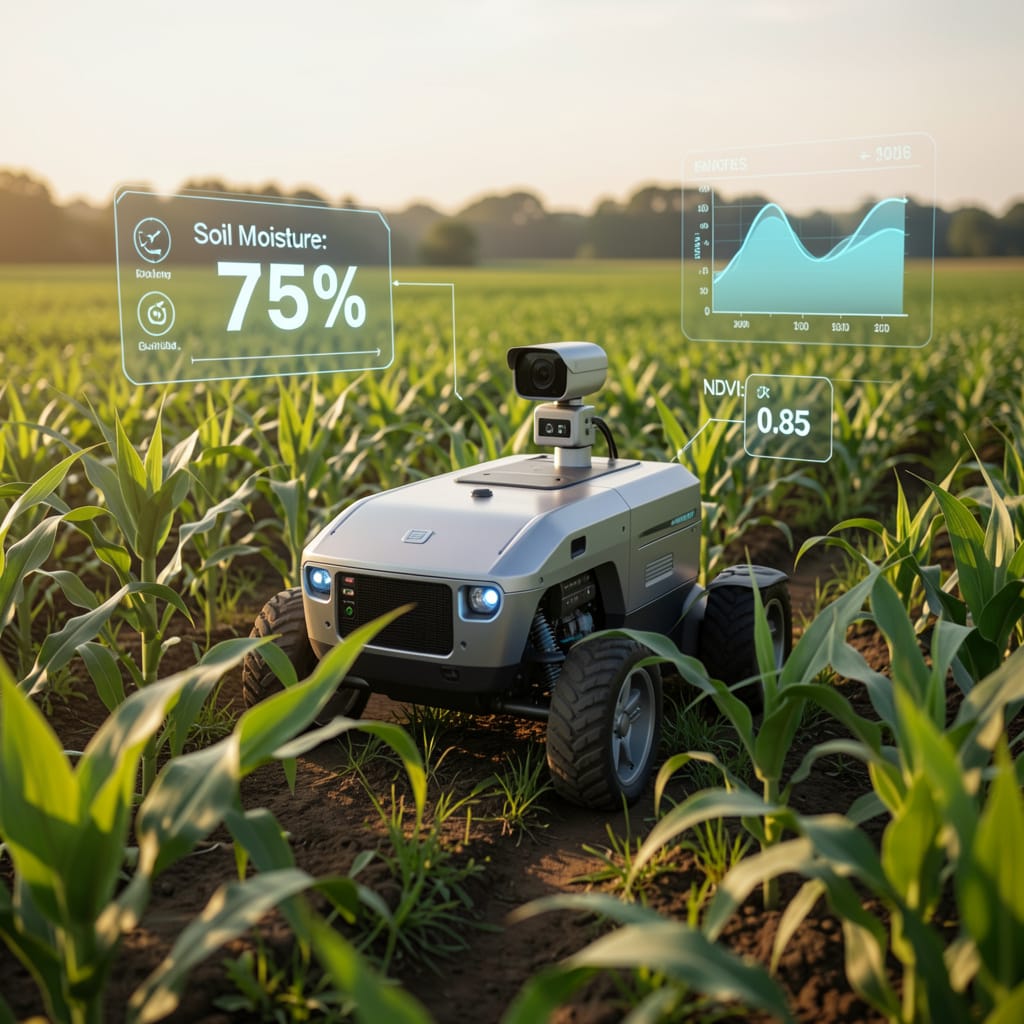
What Are Autonomous AI & AI Agents?
Autonomous AI & AI Agents are intelligent systems that can operate independently to achieve specific goals. Instead of performing one-step tasks like generating text or answering questions, they can:
Break complex problems into smaller tasks
Make decisions based on available data
Use tools such as APIs and databases
Learn from previous outcomes
Adjust their strategy when needed
Think of them as digital workers rather than digital assistants.
A traditional AI model waits for instructions.
An autonomous AI agent works toward an objective.
For example:
Instead of asking an AI:
“Write an email.”
You could give it a goal:
“Increase customer engagement by 15% this month.”
An autonomous AI agent might:
Analyze past email campaigns
Identify customer segments
Draft personalized emails
Schedule them
Track performance
Adjust strategy
That’s the difference between reactive AI and goal-driven AI.
What Is an AI Agent?
An AI agent is a system that:
Perceives its environment
Makes decisions
Takes actions
Learns from outcomes
In simple terms:
An AI agent = AI model + memory + planning + tools + decision-making loop
Modern AI agents often use Large Language Models (LLMs) as their “brain,” but they also include:
Memory storage
Access to tools (APIs, databases, software)
Task planners
Feedback loops
Traditional AI vs Autonomous AI Agents
| Traditional AI | Autonomous AI Agent |
|---|---|
| Responds to prompts | Sets and executes goals |
| One-step tasks | Multi-step workflows |
| No persistent memory | Has memory |
| Limited action ability | Can use tools & APIs |
| Human-directed | Semi-independent |
Traditional AI = smart assistant
Autonomous AI agent = digital worker
Why Autonomous AI Is a Big Deal in 2026
Autonomous AI is not just research anymore — it’s entering businesses, startups, and developer ecosystems.
Here’s why it matters:
1. Enterprise AI Automation
Companies are using AI agents to automate:
Customer support
Data analysis
Marketing campaigns
DevOps monitoring
Sales prospecting
Major tech companies like Microsoft and Google DeepMind are investing heavily in agent-based AI systems.
2. AI Agent Frameworks Are Growing
Developers now have access to powerful frameworks such as:
LangChain
AutoGPT
CrewAI
These frameworks allow developers to build multi-agent AI systems that collaborate on tasks.
3. Rise of Agentic AI Platforms
“Agentic AI” refers to AI systems that demonstrate agency — the ability to act independently toward goals.
Startups and companies like Anthropic and OpenAI are working on advanced models that improve reasoning, tool usage, and task planning.
In 2025–2026, we are seeing:
Better memory handling
Smarter decision loops
Reduced hallucination rates
Improved multi-step reasoning
How Autonomous AI Agents Work
Let’s simplify the architecture of an AI agent.
Step 1: Goal Input
The agent receives a goal.
Example:
“Research top AI automation tools and create a summary report.”
Step 2: Planning
The agent breaks the task into sub-tasks:
Search for tools
Compare features
Collect pricing info
Summarize findings
This is called task decomposition.
Step 3: Tool Usage
The agent uses tools like:
Web browsers
APIs
Databases
Code interpreters
Email systems
This is what makes AI agents powerful — they don’t just generate text; they act.
Step 4: Memory & Feedback Loop
The agent:
Stores results
Evaluates progress
Adjusts strategy if needed
This loop continues until the goal is achieved.
Real-World AI Agent Use Cases
Here are some practical examples students can understand:
1. AI Agents in Customer Support
Automatically respond to tickets
Escalate complex issues
Analyze customer sentiment
2. AI Agents in Software Development
Debug code
Suggest improvements
Run tests
Monitor performance
3. Autonomous AI in Marketing
Generate campaigns
Segment audiences
Run A/B tests
Optimize ads automatically
4. Multi-Agent AI Systems
In 2026, many systems use multiple agents working together:
Research Agent
Writing Agent
Reviewing Agent
Optimization Agent
This is called a multi-agent AI system.
Latest Updates in Autonomous AI (2025–2026)
1. Improved Long-Term Memory
AI agents now use:
Vector databases
Persistent storage
Retrieval systems
This allows them to remember previous tasks and improve over time.
2. Better Planning & Reasoning
New models are better at:
Multi-step logical reasoning
Decision tree analysis
Complex workflow execution
This makes autonomous AI workflow tools more reliable.
3. Enterprise-Ready AI Agents
Companies now demand:
Secure deployment
AI governance
Audit logs
Human oversight controls
So agentic AI platforms are adding:
Monitoring dashboards
Access control systems
Compliance tracking
4. AI Agent Architecture Improvements
Modern AI agent architecture now includes:
Planner module
Executor module
Critic/Reviewer module
Memory manager
Tool manager
This modular design improves stability.
5. AI Agents + Robotics & IoT
Autonomous AI agents are being integrated into:
Smart factories
Autonomous vehicles
Robotics systems
Here, AI doesn’t just generate text — it controls real-world systems.
Challenges of Autonomous AI
Let’s be realistic.
Autonomous AI agents still face challenges:
1. Hallucinations
Sometimes agents generate incorrect assumptions.
2. Infinite Loops
Poorly designed agents can repeat actions without progress.
3. Security Risks
Autonomous systems accessing APIs may create vulnerabilities.
4. Ethical Concerns
Who is responsible when an AI agent makes a mistake?
That’s why Explainable AI and AI governance are growing fields.
How to Build an Autonomous AI Agent (Beginner Roadmap)
If you’re a student, here’s how to get started.
Step 1: Learn Core Foundations
You need:
Python programming
Basic machine learning
APIs and REST
Databases
Step 2: Understand LLMs
Study:
Prompt engineering
Token usage
Retrieval-Augmented Generation (RAG)
Step 3: Try an AI Agent Framework
Experiment with:
LangChain agents
AutoGPT
CrewAI
Build a simple AI agent that:
Takes a goal
Searches for information
Summarizes results
Step 4: Learn Workflow Orchestration
Explore:
Task scheduling
Event triggers
Multi-agent coordination
This is where autonomous AI workflow tools become powerful.
Career Opportunities in Autonomous AI
If you focus on AI agents, you can pursue:
AI Engineer
Machine Learning Engineer
AI Automation Specialist
AI Product Manager
AI Systems Architect
Multi-Agent Systems Researcher
The demand is growing rapidly.
Future of Autonomous AI
In the next 5 years, we may see:
AI agents managing digital businesses
AI collaborating in teams with humans
Fully autonomous software development pipelines
AI agents negotiating contracts
Personal AI assistants with memory across years
But here’s something important:
Autonomous AI will not replace students who adapt.
It will replace those who refuse to learn it.
The Future Belongs to Builders
Autonomous AI & AI Agents are not just another tech trend — they represent a fundamental shift in how software works and how problems get solved. We are moving from tools that wait for instructions to systems that think, plan, and act with purpose.
That’s powerful.
But here’s what matters more: you are entering this field at the perfect time.
The students who start learning about Autonomous AI & AI Agents today will become the engineers, researchers, founders, and innovators shaping tomorrow’s intelligent systems. This technology is still evolving. Standards are still forming. Opportunities are still wide open.
You don’t need to know everything right now.
Start small.
Build a simple AI agent.
Experiment.
Break it.
Fix it.
Improve it.
Every expert in AI once started exactly where you are — curious and unsure.
The world is shifting toward intelligent automation, multi-agent systems, and goal-driven AI. The question is not whether this technology will grow. It will.
The real question is:
Will you be a consumer of Autonomous AI — or a creator of Autonomous AI & AI Agents?
Choose to build.
Choose to learn.
Choose to lead.
Your future in computer science starts with the first project you begin today.