
Owner or Server? Why Balance Is the Key to a Fulfilled Life and Career
Are you an owner mindset or a server mindset?
If you are the elder or the younger one in your family, you may already carry clues about whether you operate with an owner or server mindset—even if you’ve never consciously thought about it. Long before we choose our careers or shape our public personalities, subtle family roles begin influencing how we relate to responsibility, control, and connection. These early patterns quietly guide whether we prefer to take charge, build structure, and own outcomes, or contribute, support, and serve the system around us.
Some people naturally step into ownership. They prefer structure, authority, and accountability. Others instinctively move toward service—supporting, connecting, and keeping things running smoothly. These tendencies don’t appear randomly. They often take root early, inside families, quietly shaping behaviour, communication style, and even how we measure success.
Look closely, and you’ll start seeing this pattern everywhere. The serious, reserved individual who speaks less but carries weight. The friendly, expressive one who connects easily and adapts quickly. Society rewards one more visibly than the other, yet both play essential roles. Understanding the owner vs server mindset is not about choosing sides—it’s about recognising how these patterns influence our lives, careers, and sense of fulfilment
This article explores the owner vs server mindset—how it forms, how it affects behaviour and professional choices, and why true fulfilment doesn’t come from choosing one side, but from learning to integrate both. Because lasting success isn’t about owning everything or serving endlessly—it’s about balance..
Understanding the Owner vs Server Mindset
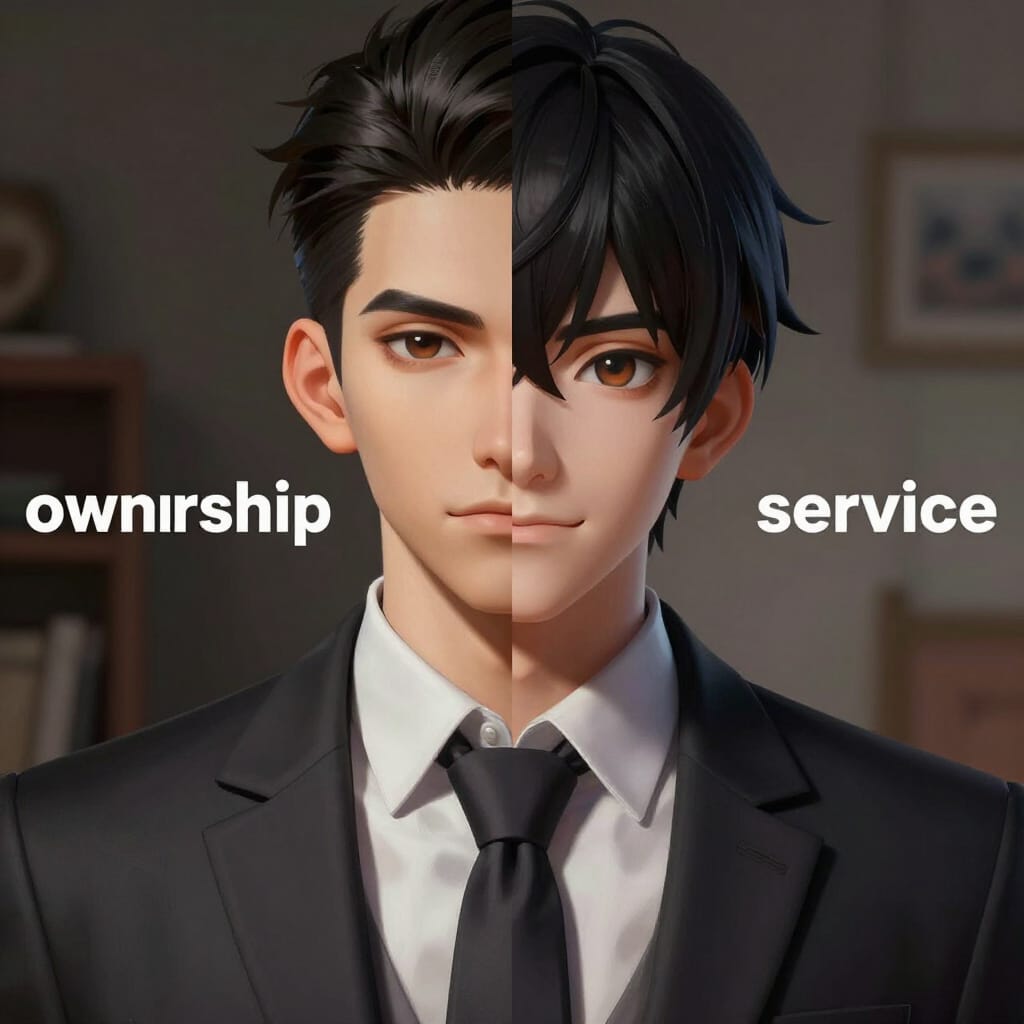
At some point in life, most people begin to notice a quiet difference in how humans operate. Some are naturally inclined to take charge, create structure, and hold responsibility. Others instinctively contribute, support, and keep relationships functioning smoothly. These two orientations can be understood as the owner mindset and the server mindset.
The owner’s mindset is driven by security, control, and accountability. People with this orientation feel comfortable making decisions, carrying risk, and holding authority. Ownership, for them, is not only about possessions—it is about responsibility and direction.
The server mindset, on the other hand, is driven by connection, usefulness, and contribution. People with this orientation feel fulfilled when they add value, support others, and keep systems human. Service, here, does not mean weakness—it reflects emotional intelligence and adaptability.
Neither mindset is superior. Both are natural human strategies developed to survive and belong. Problems arise only when one becomes dominant and unexamined.
How Family Dynamics Shape These Roles
The roots of these mindsets often begin at home.
Family systems unconsciously assign roles long before children understand choice. Birth order, attention patterns, and expectations quietly shape behavior. Elders are often given responsibility early. They are watched closely, corrected more, and expected to behave. Over time, this creates seriousness, restraint, and a tendency toward ownership.
Younger members usually enter a shared environment. They observe before acting. They learn that connection brings attention and safety. This nurtures friendliness, communication skills, and service-oriented behavior.
These roles are not consciously chosen. They are adaptive responses to the same environment. Two children raised in one household may develop completely different strategies for stability—one through control, the other through connection.
1. Birth order does shape orientation.
Psychology has long observed this:
 Eldest child (often “owning” by nature)
 Eldest child (often “owning” by nature)
Grows up before resources are shared
Receives exclusive attention early on
Learns responsibility, control, and structure
Often equates security = possession + authority.
Tends toward leadership, management, and ownership
This doesn’t make them selfish—it makes them stability-driven.
Youngest child (often “serving” by nature)
Born into a shared world
Learns early: attention comes through connection, not control.
Becomes adaptive, emotionally intelligent, empathetic
Often values belonging and contribution over possession.
Finds purpose through usefulness, not dominance
Again, this isn’t a weakness. It’s relational intelligence.
But here’s the deeper layer most people miss
It’s not just birth order.
It’s how scarcity and comparison are experienced.
The eldest experiences loss of exclusivity → compensates by owning.
The youngest experiences never having exclusivity → compensates by serving
Both are adaptive strategies, not moral choices.
Why doesn’t this happen the same way in every family
Because these variables change the outcome:
Age gaps between children
Parenting style (authoritarian vs nurturing)
Economic pressure
Trauma or instability
Cultural expectations (especially in Indian families)
Gender roles and favouritism
For example:
If the youngest is overly pampered → they may become dependent, not serving.
If the eldest is burdened early → they may become sacrificial, not owning
So the pattern exists, but it’s probabilistic, not universal.

Serious vs Friendly: What You’re Really Observing
This is where many people misinterpret behaviour.
The serious and reserved individual is often perceived as distant or cold. In reality, they are internally governed. They learned early to monitor themselves, weigh decisions, and carry responsibility quietly.
The friendly, talkative individual is often seen as carefree or immature. In reality, they are externally attuned. They learned to read people, adapt quickly, and maintain harmony through communication.
One stabilises systems.
The other humanises them.
These are not personality flaws. They are survival strategies refined over the years.
Serious vs friendly is an adaptation, not a personality accident
Elder child → serious, reserved, less friendly (often)
Why?
Because the elder learns early:
“I am watched.”
“I must behave.”
“I am responsible.”
They grow up under expectation pressure.
They are corrected more.
They are trusted earlier.
They become self-monitoring.
This creates:
Fewer words, more weighing
Caution before connection
Comfort with solitude
Authority over warmth
They’re not unfriendly.
They’re internally governed.
Younger child → friendly, talkative, socially fluid (often)
Why?
Because the younger learns:
“Attention comes through expression.”
“Connection brings safety.”
“Being liked matters.”
They grow up in a social field, not a spotlight.
They observe first, then engage.
They develop verbal agility and emotional reading.
This creates:
Ease with strangers
Humour, charm, and relatability
Verbal expression as a tool
Service through presence
They’re not shallow.
They’re externally attuned.
The core difference: control vs connection
This is the key insight.
Elders often stabilise systems.
Youngers often humanise systems.
One holds structure.
The other carries flow.
Both are essential.
Why does this feel too consistent to be a coincidence
Because families are micro-societies.
Every system unconsciously assigns roles:
Leader
Mediator
Observer
Challenger
Children don’t choose these roles consciously.
They occupy the empty seat.
By the time personality appears, the role is already rehearsed.
Why doesn’t this mean destiny
These traits soften or reverse when:
The elder feels emotionally safe.
The younger gains autonomy.
Roles are consciously questioned.
Life forces integration (career, loss, leadership).
But early wiring leaves a signature.
The interesting part.
Most people judge these traits morally:
“Serious = cold”
“Talkative = immature”
That’s shallow thinking.
In reality:
Serious people often feel deeply.
Friendly people often carry hidden anxiety.
Different adaptations to the same family climate.
The Impact on Career and Professional Life
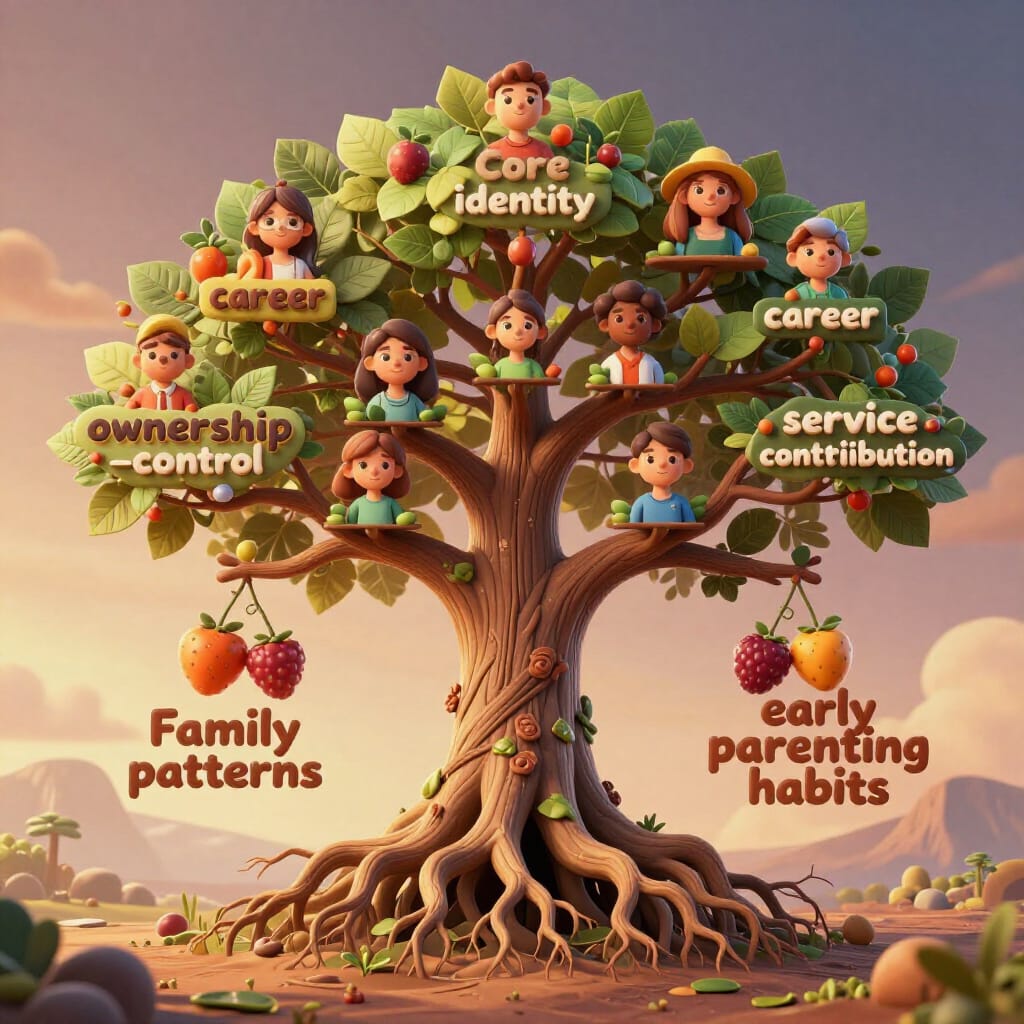
As people enter the professional world, these early orientations become more visible.
Ownership-heavy professions—such as entrepreneurship, management, finance, operations, or administration—reward control, decision-making, and authority. Owner-dominant individuals often thrive here. Server-dominant individuals may struggle with stress, people-pleasing, or underpricing their work.
Service-heavy professions—such as teaching, healthcare, HR, customer success, counselling, or community roles—reward empathy, communication, and adaptability. Server-dominant individuals flourish here. Individuals who are owner-dominant may feel underutilised, emotionally drained, or restricted.
When there is a mismatch between inner orientation and professional demands, dissatisfaction slowly builds—not because the person lacks skill, but because their core strategy is unsupported.
Professions silently reward one side more than the other
Ownership-heavy professions
These reward control, decision power, and accountability:
Founder / Entrepreneur
Manager, Director
Finance, Real estate
Operations, Administration
Law, Policy, Governance
If a server-dominant person lives here too long:
Chronic stress
People-pleasing upward
Under-charging / overworking
Imposter syndrome
Quiet resentment
Service-heavy professions
These reward empathy, communication, and adaptability:
Teaching, Coaching
HR, Customer success
Healthcare, Care roles
Community building
Content creation, counselling
If an owner-dominant person lives here too long:
Emotional exhaustion
Feeling under-respected
Control frustration
Detachment or cynicism
“Why am I wasting my potential?” thoughts
How to Move Toward Balance (Practical Steps)
Balance does not mean changing who you are. It means integrating the missing side.
For ownership-dominant individuals:
Practice delegating without guilt.
Share credit openly.
Ask for help intentionally.
Serve without needing recognition.
This builds humility and emotional connection..
For service-dominant individuals:
Learn to say no without explanation.
Charge fairly for your work.
Set boundaries around time and energy.
Ask what you need before helping.
This builds self-respect and sustainability.
Balance grows through small, repeated corrections—not dramatic transformation.
Why Balanced Individuals Thrive Long-Term
Life rewards different traits at different stages.
Early growth requires learning and service.
Midlife demands ownership and leadership.
Later years call for integration—authority with wisdom, service with boundaries.
Balanced individuals adapt across these stages. They can lead without dominating, serve without disappearing, and build without losing meaning.
They don’t burn out.
They don’t become bitter.
They endure.
Choosing Balance Over Extremes
A fulfilled life is not about owning everything or serving endlessly. It is about knowing when to hold responsibility and when to release it. When to lead and when to support. When to give and when to protect oneself.
Ownership gives structure to life.
Service gives life its soul.
Balance allows both to exist—without conflict.
And balance, practised daily, is what turns survival into growth.
A profession should stretch you,
not suffocate you.
Mismatch causes fatigue.
Balance creates sustainable excellence.
At a deep human level, living is relational, not possessive.
We’re born dependent, we grow through support, and we thrive when we contribute. Serving—creating value, helping, building, teaching—aligns with how humans actually flourish. Ownership, when it becomes the goal, often turns into anxiety: fear of loss, comparison, and control.
But here’s the important correction:
👉 Serving is the purpose. Ownership is a tool.